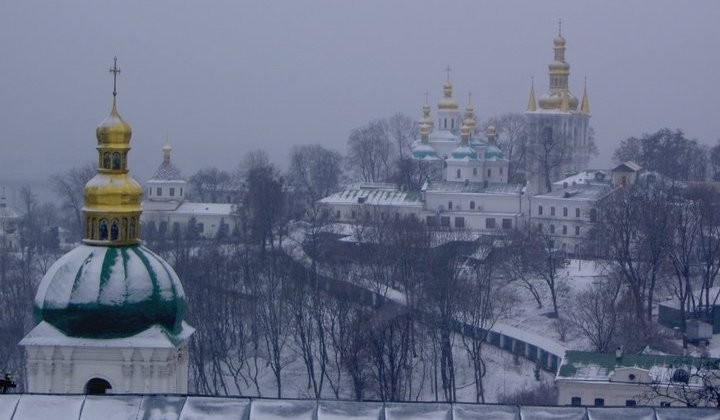
by Adam Fuss
The war in Ukraine demands our best as communication professionals
Three weeks ago, Russia invaded Ukraine. Among other effects, this event confirmed the accuracy of British and U.S. intelligence, unleashed Europe’s greatest refugee and humanitarian crisis since the Second World War, accelerated authoritarian trends within Russia, brought unprecedented unity to western leaders and institutions, and sparked a mass exodus of global brands from the Russian market.
Given that Russia and Ukraine have long been an important part of my life, both personally and professionally – I have family in Russia, numerous Russian and Ukrainian friends, and longstanding business interests in the region – I’m frequently approached with a variety of questions.
Some are motivated by genuine concern: How are your relatives faring? How is your business doing? The short answer is “we’re adapting”.
Others reveal a longing to understand what Vladimir Putin wants, what his endgame is, how long this conflict will last, how much carnage will ultimately be left in its wake, and whether Ukraine can win this war. I’m always quick to note that people far smarter than me are covering these kinds of questions much better than I ever could. Julia Ioffe at Puck News and the Financial Times are reliably excellent. Likewise with Meduza, The Kyiv Independent and the numerous Twitter feeds maintained by journalists and other experts on the ground. It’s a full-time job just to keep up.
So too is the often immediate need to communicate in and about a region where many communication professionals have little or no experience. And this is where the third group of questions comes in. What are communication professionals to do?
In some cases, the needs are huge and unrelenting on a near daily basis. Employees, contractors, and their families; the media; investors; government officials; activists; and customers – basically the entire gamut of stakeholders – all require frequent updates on everything from changing legal requirements (whether due to sanctions or Russia’s increasingly draconian information environment) to boycotts to employee safety and evacuation efforts.
So, understanding that, what are communication professionals to do?
The short answers are 1) Do what you’ve been doing (or should have been doing) and 2) understand that you’re not alone, make use of your network, and be assertive in demanding the resources you need.
Communication principles are universal; so too is the need for agility
Remember that communication principles are universal. Doing what you’ve been doing means taking the same principles and standards you use (or should be using) in your other work and applying them to this seemingly strange and unfamiliar situation. Don’t feel as though you need to reinvent the wheel. Sure, your choice of communication channel will likely need to shift – private Telegram channels and encrypted WhatsApp messages might be more useful for reaching audiences in a war zone than traditional corporate emails and intranets – but the same principles of audience segmentation and receiver-centric messaging still apply. People are people, after all.
Step up, speak up and demand support
It may feel like you’re all alone when the workday exceeds 12 hours and there’s precious little time for anything else. But you’re not alone. LinkedIn and other social media are the logical places to start whether you just have a question or need to hire people with expertise in the region.
Look to professional associations as well. The International Association of Business Communicators (IABC), the Institute of Internal Communication (IoIC), and the Public Relations Society of America (PRSA) all offer a variety of resources on this conflict, including statements and webinars. The Institute of Translation and Interpreting (ITI) and the American Translators Association (ATA) both maintain directories of competent translators, interpreters and other language professionals. Check these associations out and consider joining one if you haven’t already.
The takeaway here is to ask questions if you need answers; silence will be met with silence. Ask for help if you need it; if you’re overwhelmed by long days, that feeling will almost certainly continue if you don’t demand the help you need.
With countless lives and livelihoods on the line, there is no more appropriate time to speak up, step up and prove our mettle as communication professionals.
This article was originally published on LinkedIn on March 18, 2022.