by Adam Fuss
Why Fulbright matters now more than ever
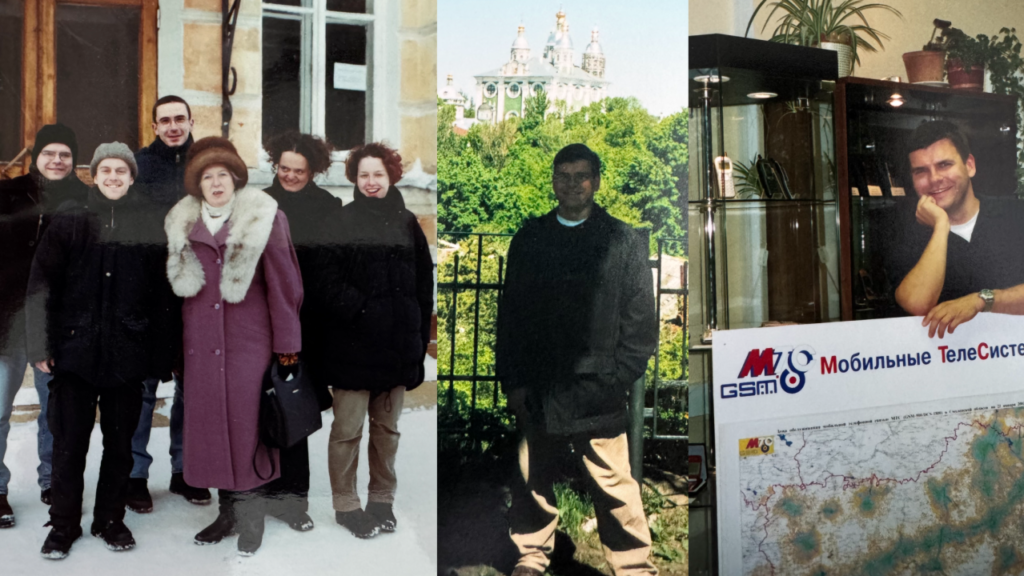
In 2001, fresh out of college, I arrived in Russia on a Fulbright grant. There was no Google Translate, no social media, and no smartphone in my pocket to help me navigate daily life. If I wanted to communicate, I had to learn the language. If I wanted to understand the culture around me, I had to immerse myself in it. If I needed help, I had to ask for it. To do all of this required patience, the ability to listen and a willingness to meet people on their terms.
While archival research and Russian language study were the focus of my grant, what I didn’t realize at the time was that some of the most important lessons I would learn over the course of that year would have little to do with any of that.
I learned how to rely on other people and that it’s okay to do so. I learned the value of stepping outside my comfort zone and building connections with people whose experiences and perspectives differed vastly from my own. I learned that understanding another culture requires humility, curiosity, and a willingness to listen.
The experience was humbling, invigorating, and exciting. There was never a dull moment.
More than two decades later, those lessons continue to shape my career and my worldview. They also continue to drive my belief about why the Fulbright Program remains one of America’s most important long-term investments.
More than sending Americans abroad
When many people hear the word “Fulbright,” they think of a prestigious grant that sends talented Americans to countries around the world.
That’s certainly part of the story. It was my story. But it is far from the whole story.
Every year, Fulbright also brings talented students, scholars, teachers, and other professionals from around the world to the United States. They study, teach, conduct research, and build relationships in communities across our country. The experiences they have here shape how they understand America for the rest of their lives.
Likewise, Americans who participate in Fulbright programs return home with new perspectives, new ideas, and a deeper understanding of the world beyond our borders, just as I did.
The benefit of all this is something far more valuable than a grant, an academic credential, or the result of any single research project. It is a network of relationships built on mutual understanding and respect. Those relationships often last for decades. I know mine have.
Understanding is not a luxury
In recent years, we have seen growing political polarization, rising nationalism, and increasing skepticism about international engagement in many parts of the world, including and especially right here in the United States. Against that backdrop, programs like Fulbright can sometimes be dismissed as nice-to-have initiatives.
That view fundamentally misses the point.
International exchange is not a luxury. It is an investment. It is an investment in diplomacy, innovation, and economic competitiveness. The impact can be seen in the work Fulbright alumni do every day—in education, science, business, government, healthcare, technology, and countless other fields that strengthen both American communities and America’s position in the world.
It is also an investment in national security. People are less likely to fear, misunderstand, or dehumanize those they know and understand. Countries are stronger when their citizens can engage constructively across cultures, languages, and borders.
Fulbright does not solve every global challenge. It does not prevent every conflict. It is not a panacea for many of the ills shaping our world today. No single program could accomplish all of that. But Fulbright does create opportunities for dialogue, collaboration, and understanding at a time when those qualities are in increasingly short supply.
Policymakers must therefore continue investing in educational and cultural exchange programs if we wish to strengthen communities, institutions, and relationships that ultimately serve the interests of the United States and our partners around the world.
Lessons relevant to my own career
Long before I built a career in strategic communication and change management, Fulbright taught me a lesson that continues to guide me professionally: effective communication begins with understanding, and understanding begins with listening.
Learning Russian eventually led me to discover that I had a talent for translation, which made sense given that I had always loved writing in my native English. The realization that communicating across cultures is both challenging and rewarding helped launch a career in strategic communication and, eventually, change management.
Today, organizations talk frequently about globalization, localization, and reaching diverse audiences. Expanding into new markets, engaging in technology transfer, and tapping into valuable human resources and intellectual capital in far-off places all require communication across cultures. This is not simply a matter of translating words. It requires understanding how people think, what they value, how they interpret information, and how their experiences shape their perspectives.
Fulbright gave me an appreciation for that reality long before I encountered it professionally. It taught me that diversity of background, thought, and perspective is not an obstacle to overcome. It is a strength to embrace.
The future cannot be taken for granted
This year marks the 80th anniversary of the Fulbright Program. That longevity is worth celebrating, but it should not lead us to assume that the program’s future is guaranteed.
Programs like Fulbright depend on sustained support from alumni, educational institutions, policymakers, businesses, nonprofit organizations, and members of the public who understand their value.
As someone who benefited from a U.S.-Russia Fulbright exchange that no longer exists, I have seen firsthand how quickly opportunities for educational and cultural exchange can disappear when relationships between nations deteriorate. If we believe that international understanding contributes to peace, prosperity, innovation, and opportunity, then we must continue investing in the programs and institutions that make such understanding possible. These relationships, networks, and opportunities do not sustain themselves. Like any worthwhile investment, they require ongoing commitment and stewardship.
For those of us who have benefited from Fulbright, that responsibility is especially important. We were the beneficiaries of a significant investment, and we have an obligation to give back. Giving back can take many forms: mentoring future participants, engaging with local alumni chapters, advocating for international exchange, supporting organizations that share our values, or simply helping others understand why these programs matter.
Fulbright has spent eight decades building bridges between people, cultures, and nations. Those bridges are not permanent simply because they exist today. They must be maintained, strengthened, and extended to future generations.
At its core, Fulbright is built on a simple but powerful idea: that greater mutual understanding between people and nations creates the conditions for stronger relationships, greater cooperation, and a more peaceful world. In a world that often seems to exhibit a misguided determination to build new walls rather than embrace any of those ideals, the mission of Fulbright matters now more than ever.
This article was originally published on LinkedIn on June 9, 2026.